Innovative Software for Hospitality & Travel Growth
Trawlii helps hospitality and travel brands deliver seamless guest experiences through custom, scalable digital solutions.
Schedule Free Consultation
Technology is rapidly changing hospitality and travel. Guests expect instant bookings, personalized service, and a smooth digital experience.
Trawlii helps businesses meet these needs with custom software, from booking apps to management systems, boosting efficiency, satisfaction, and long-term growth.

Trawlii offers strategic insights to align your business needs with the right tech stack, boosting performance and guest loyalty.
We develop tailored booking engines, guest portals, CRM systems, and more to meet your unique business goals.
Trawlii upgrades outdated platforms with secure, scalable, and cloud-ready systems for better efficiency and flexibility.
Build modern booking and payment platforms that deliver secure, user-friendly travel and hospitality experiences.
We create responsive apps for booking, itinerary management, room service requests, and guest communications.
Unlock insights from user behavior and offer personalized experiences that drive bookings and increase guest satisfaction.

Hotels & Resorts

Travel Agencies

Tour Operators

Online Travel Platforms

Airlines & Flight Aggregators

Vacation Rental Providers

Cruise Lines

Hospitality Tech Startups
Our US-based client offers diverse offline/online courses and aims to launch an income-generating portal. Students can register, and access both free and paid courses with subscription plans.
View Case Study ↗

10+ Years of Industry Experience
Global Delivery Model
Proven Track Record Across Domains
Dedicated Team of Architects & Engineers
Client-Centric Approach
Scalable, Future-Proof Code
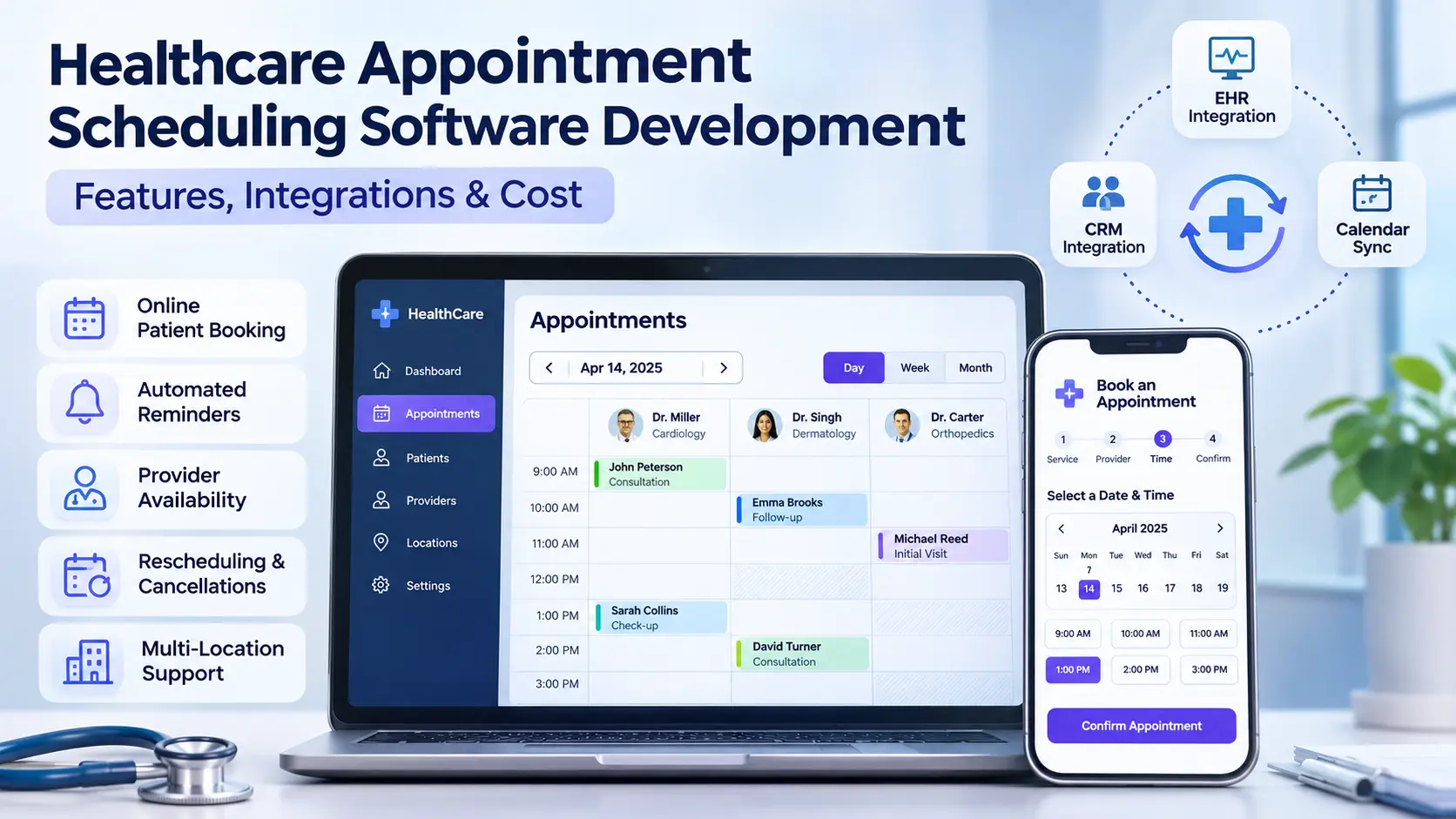
A patient goes to the clinic website at 9 PM, books an appointment for the next day and the confirmation appears on the screen. Patient thinks all is sorted. But the clinic schedule tells a completely different story. The doctor is not available at that time, the booking hasn't made it onto the staff calendar, or the request is still awaiting confirmation. The patient turns up thinking they have an appointment, the front desk have nothing at all. This is one example of why healthcare appointment booking isn't just about having an online booking calendar. Medical practice scheduling needs to take into account provider availability, appointment type, clinic opening and closing times, patient information and the communication flow. If all of these are disconnected, then the staff end up with far more time spent correcting appointments and the patient can end up with all sorts of confusing information. Custom healthcare appointment scheduling software can be used to manage those workflows in a single integrated system. In this guide we look at the key features, the integrations you'll need, the development process, the security considerations and the various factors that will impact the cost of building a healthcare scheduling application.
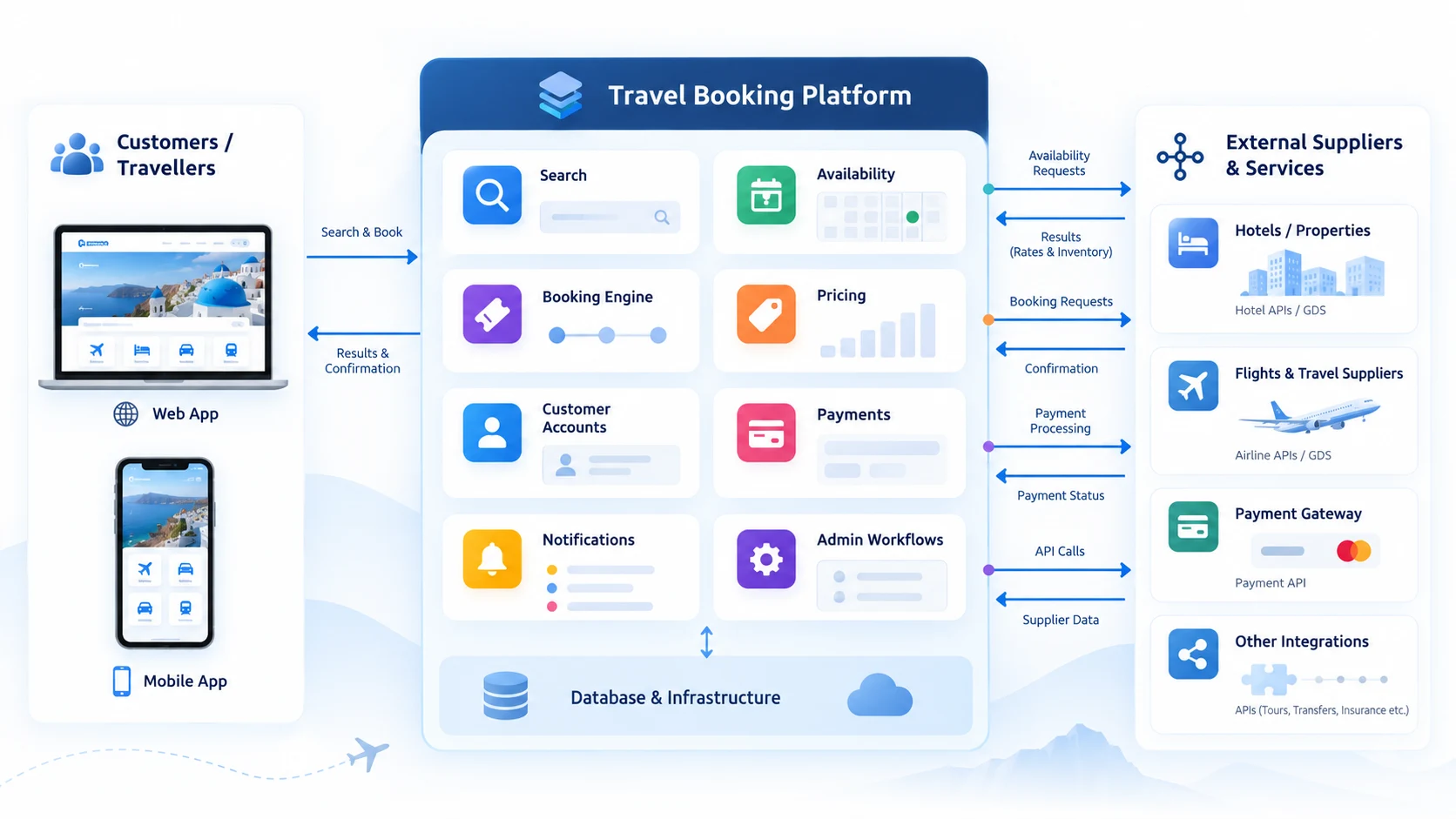
If you look at a travel booking website, it appears to be straightforward – you click to search, select a travel package, make a payment, and get a confirmation. In the background of that trip lies a much more challenging software issue. A production travel platform may need to integrate live inventory, pricing, availability, customer accounts, payments, cancellations, supplier integrations, notifications, and administrative workflows—and ensure that the traveller does not feel these layers of complexity. This is why it is necessary to begin with architecture and operations when developing travel booking software successfully, instead of screens. The first question that any hotel chain, tour operator, OTA, or travel-tech startup should ask is not “Which framework shall we use?” It should be: “What booking process should we have in our own system, and what parts should be externalized?”

If you are setting a software development budget in 2026, you have probably already seen quotes that differ by six figures for what looks like the same product. That gap is not random. Scope, technology choices, team location, engagement model, and what gets quietly left out of the first proposal all move the number — often more than feature lists alone would suggest. Cost transparency matters because opaque estimates create the wrong kind of risk. You either over-allocate capital you could use elsewhere, or you approve a lowball figure that collapses once QA, licences, cloud, and change requests appear. Neither outcome helps a CTO, IT Director, or founder who needs a ship date and a board-ready number. This SME guide explains custom software development cost 2026 in practical terms: what drives the price, realistic ranges by project type, hidden costs buyers routinely miss, how to get a software development cost estimate you can plan against, and why many growing organisations look to India-based teams without giving up quality. By the end, you will know how to brief a partner and judge whether a quote is honest — or incomplete. Quick reference — typical project ranges (USD, mid-complexity, blended offshore/nearshore delivery): Project type Typical 2026 range (USD) MVP / prototype $15,000 – $50,000 Web application / customer portal $40,000 – $150,000 Cross-platform mobile (iOS & Android) $50,000 – $180,000 Enterprise platform / ERP / CRM $150,000 – $500,000+ Pure onshore delivery in the USA or Germany usually sits higher on the same scope. Use the table as a planning band, not a fixed quote.
Whether you're looking to build a custom digital product, revamp your existing platform, or need expert IT consulting or you need support, our team is here to help.
Have a project in mind or just exploring your options? Let's talk!
 contact@trawlii.com